
What to Do When You Receive a 1099 for Rent Income
1/7/20263 min read
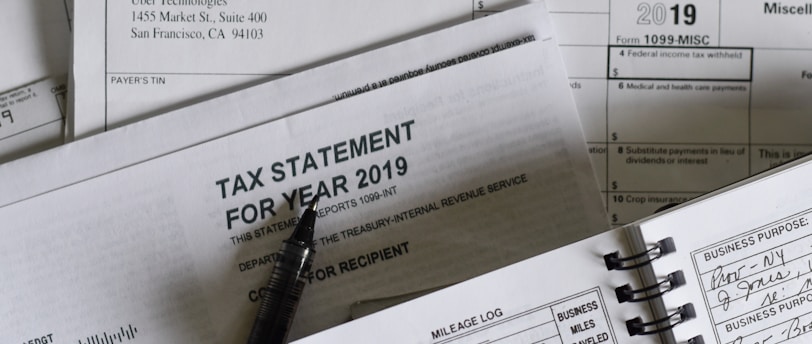

Receiving a Form 1099-MISC (or sometimes a 1099-K) can cause a moment of panic for landlords. Don't worry, it's a routine part of reporting rental income. This form simply tells the IRS (and you!) how much rent income you received from a single payer (often a commercial tenant or a property management company) that exceeded $600 during the tax year.
Here is your essential guide to understanding and reporting that 1099 rental income correctly.
Step 1: Understand Which 1099 You Received
The first step is identifying which version of the Form 1099 landed in your mailbox. For most real estate landlords, the relevant forms are the 1099-MISC and, increasingly, the 1099-K.
Form 1099-MISC (Miscellaneous Income)
Where to look: Your rental income will almost always be reported in Box 1, "Rents."
Why you got it: Typically, this is issued by a commercial tenant or a property management company that paid you $600 or more in rent over the year.
Note: The older practice of reporting non-employee compensation (for services like repair work) on the 1099-MISC is largely gone. That's now on the 1099-NEC.
Form 1099-K (Payment Card and Third Party Network Transactions)
Where to look: This form reports gross payment amounts from third-party payment processors (e.g., credit card payments processed online, certain payment apps).
Why you got it: If your tenants pay rent using online services or apps and the platform meets the reporting threshold, they may issue you a 1099-K.
Key takeaway: Regardless of which 1099 you receive, it is only a summary of the gross income reported to the IRS. You must report ALL your rental income, even if you didn't receive a 1099.
Step 2: Verify and Reconcile the Amount
Take a deep breath and compare the amount on the 1099 form to your own records.
Check Your Records: Review your bank statements, payment confirmations, and property ledger to calculate the actual gross rent you received from that specific payer for the tax year.
Verify the Payer: Make sure the payer's name and your Taxpayer Identification Number (TIN—usually your Social Security Number or EIN) are correct on the 1099 form.
Handle Discrepancies:
If the 1099 amount is wrong: Immediately contact the payer (the person or entity listed on the top left of the 1099) and ask them to issue a corrected Form 1099 (which will have a box checked indicating it is a corrected statement).
If you can't get a corrected form: You must still report the correct amount of income on your tax return. You should be prepared to explain the difference if the IRS inquires.
Step 3: Report Your Rental Income on Schedule E
For most landlords, all rental income—whether it's on a 1099 or not—is reported on IRS Form Schedule E, Supplemental Income and Loss.
The Schedule E Walkthrough (Part I)
Line 3 (Rents Received): This is where you enter the total gross rent received for the property, including the amount listed on your 1099-MISC (Box 1) or 1099-K, plus any other rent received for that property (e.g., personal checks, cash payments, security deposits retained for damages).
Lines 5-20 (Expenses): This is the most crucial part! You subtract all your deductible rental expenses from your gross income. This is why you don't pay tax on the full 1099 amount!
Best Practices for Deductions
Your goal is to report your Net Rental Income (or loss). Make sure you claim every eligible deduction to reduce your taxable income. Common deductible expenses include:
Advertising: Costs for finding tenants.
Management Fees: Fees paid to a property manager.
Repairs: Minor fixes that maintain the property (e.g., a broken window, leaky faucet).
Note: Improvements (e.g., a new roof, adding a deck) must be depreciated, not fully
deducted as an expense.Utilities & Insurance: Costs you pay as the landlord.
Mortgage Interest & Taxes: Interest paid on the property loan and real estate taxes.
Depreciation: This is usually the largest deduction. You must use Form 4562 to calculate the annual wear-and-tear allowance on the property structure (not the land).
Best Practices: Keep Pristine Records
The 1099 form is a reminder that the IRS knows about your gross rental receipts. Your defense for claiming deductions is your excellent record-keeping.
Dedicated Accounts: Use a separate bank account and credit card for all rental-related transactions. This makes year-end reconciliation simple.
Organize Receipts: Keep all invoices, receipts, and canceled checks for at least three years (the typical IRS audit window). A digital record (scanned copies organized by property and expense type) is the gold standard.
Track Mileage: If you use your car for rental activities (e.g., driving to the property for repairs, showing the unit), keep a mileage log for a potential deduction.
Receiving a 1099 for your rental income is just a signal—it's your cue to accurately report the income and claim the deductions you deserve on Schedule E. Follow these steps, and you'll navigate the tax season like a pro!